Outdoor Kitchen Permit Rules in New Jersey: What Homeowners Should Know
Outdoor kitchens have become one of the most sought-after home upgrades in New Jersey, combining functionality, style, and outdoor living comfort.
Before breaking ground, though, it’s crucial to understand what kinds of permits and planning permissions are required. Whether you’re envisioning a simple grill station or a fully equipped cooking area, certain regulations apply and knowing them early can save you time, money, and stress.
This article breaks down New Jersey’s outdoor kitchen permit requirements, zoning rules, and common pitfalls so you can plan a compliant, worry-free project.
Understanding Permit Requirements for Outdoor Kitchens in New Jersey
In New Jersey, most outdoor kitchens that include permanent installations such as plumbing, gas, or electrical connections require one or more permits. These typically include building, electrical, and plumbing permits, depending on your project’s design and complexity.
If your outdoor kitchen will feature
- A built-in grill connected to a natural gas line
- A sink or refrigerator requiring plumbing or electrical wiring
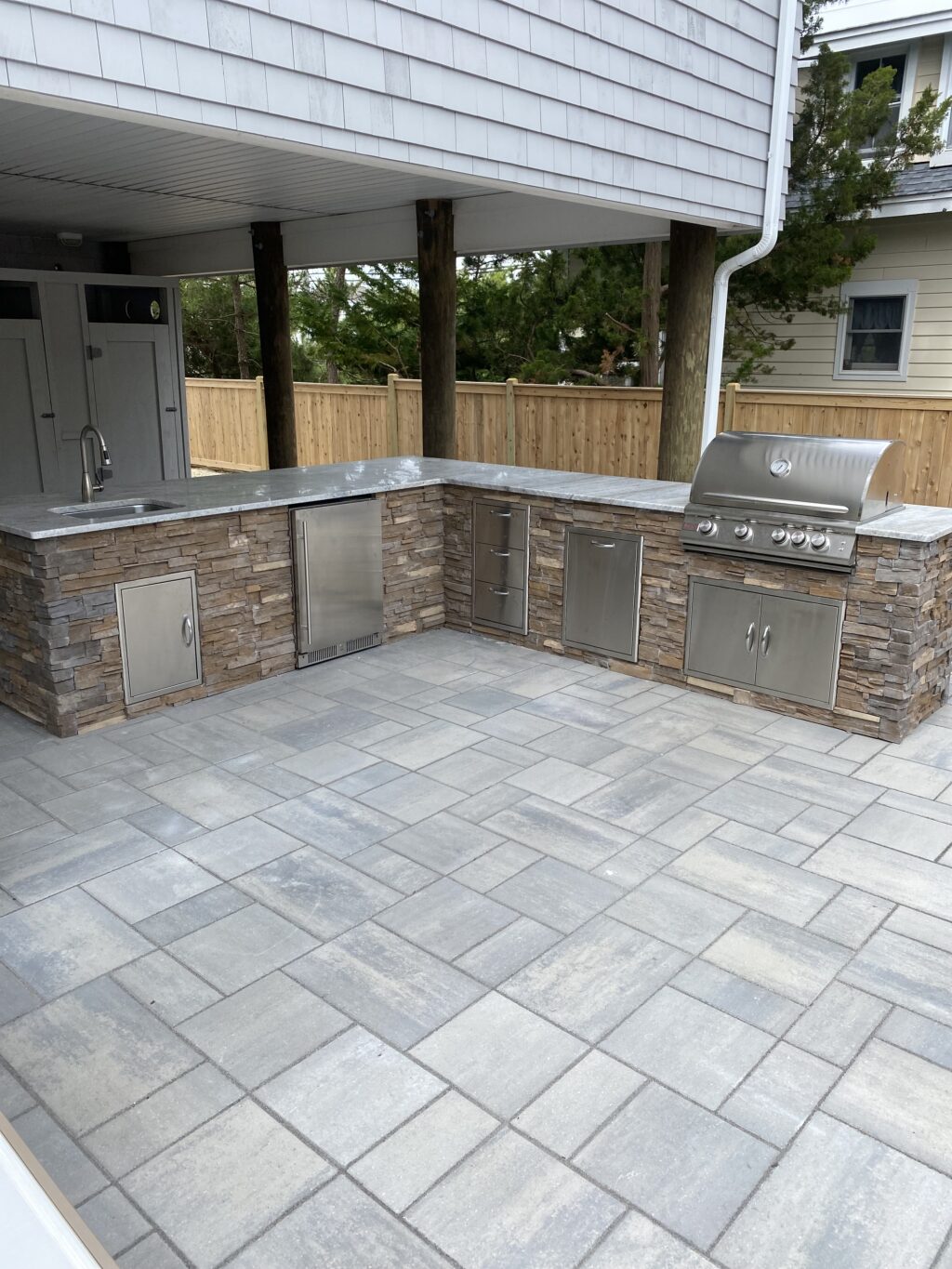
- Structural elements like stone counters or overhead covers
Then you’ll need approval from your local municipal construction office. These permits ensure your project meets the New Jersey Uniform Construction Code (UCC) standards for safety and durability.
Portable or modular outdoor kitchens those that plug into existing outlets and don’t alter your property’s utilities may not need a building permit. However, even if your setup is temporary, it’s best to verify with your town’s building department before starting.
Requirements can vary between municipalities.
When You Need a Permit for Your Outdoor Kitchen Build and When You Don’t
Local code determines how “permanent” your outdoor kitchen is, which tells you when you need a permit.
You likely don’t need a permit if:
- You’re using a freestanding grill, prep station, or cart-style island.
- No new plumbing, gas, or electrical lines are being installed.
- The kitchen can be easily removed without structural impact.
You must apply for a permit if:
- You’re connecting to utilities (gas, water, and electricity).
- You’re building a stone or concrete kitchen island.
- You’re altering drainage or extending your patio footprint.
Some towns also require a zoning review before issuing a permit.
This ensures your design meets property setback limits, doesn’t encroach on easements, and complies with neighborhood design standards. Zoning officers frequently review site plans that show the precise location of your outdoor kitchen in relation to your home and property lines.
Skipping this step can lead to inspection delays or even fines, so make sure your contractor includes zoning compliance as part of the pre‑construction process.
How Local Zoning Rules in Ocean County Can Affect Your Project
If you live in Ocean County, zoning laws can differ significantly between municipalities such as Toms River, Brick, and Point Pleasant.
These rules determine how much of your property can be covered by impervious surfaces (patios, concrete pads, etc.) and how close you can build to fences, homes, or other structures.
Key considerations include the following:
- Setback requirements: Most towns require outdoor kitchens to be at least 10 feet from property lines.
- Lot coverage limits: If your project increases the non‑permeable surface area of your yard, you may need stormwater approval.
- Flood zone restrictions: In coastal areas, you may face stricter elevation or drainage requirements.
Because these rules vary, consulting your local planning or zoning department—or partnering with a contractor familiar with these regulations is essential. Jersey Shore Pavers has extensive experience navigating township codes and can handle all the paperwork, ensuring your project stays compliant and on schedule.
What Can Get Delayed or Denied and How to Avoid Costly Mistakes
If the paperwork isn’t complete or construction starts before the permits are approved, even the best outdoor kitchen designs can be delayed.
Common issues include:
- Submitting inaccurate site plans or missing utility details.
- Failing to meet setback or coverage requirements.
- Starting construction without a permit, triggering stop‑work orders.
To avoid these setbacks:
1. Apply for permits early processing can take several weeks.
2. Hire a licensed contractor who understands New Jersey’s UCC requirements.
3. Keep copies of all approved drawings and inspections for your records.
If you’ve already built an outdoor structure without permits, don’t ignore it. Many New Jersey municipalities allow retroactive permit applications, though they may include additional inspection fees.
Addressing the issue proactively is far cheaper than facing potential fines or forced demolition.
Let Jersey Shore Pavers Handle the Details From Permits to Perfect Finish
You should be excited about building an outdoor kitchen, not scared.
People who live in Coastal, New Jersey, can relax knowing that Jersey Shore Pavers will handle every step of the process professionally, from design and permitting to construction and inspection.
Our team ensures your outdoor kitchen complies with all applicable local building and zoning regulations, preventing costly surprises down the road. Whether you’re envisioning a compact grilling corner or a full luxury cooking area with custom stonework, we combine craftsmanship with compliance for results that last.
We’ll guide you through:
- Site planning and layout
- Permit submission and approval
- Utility coordination and inspection scheduling
- Final finishing and installation
With the right professionals on your side, you can transform your backyard into a beautiful, functional outdoor living space without the headache of navigating local red tape on your own.
Call us today to talk about your outdoor kitchen project, or click here to get a free estimate and start making your dream space a reality!