
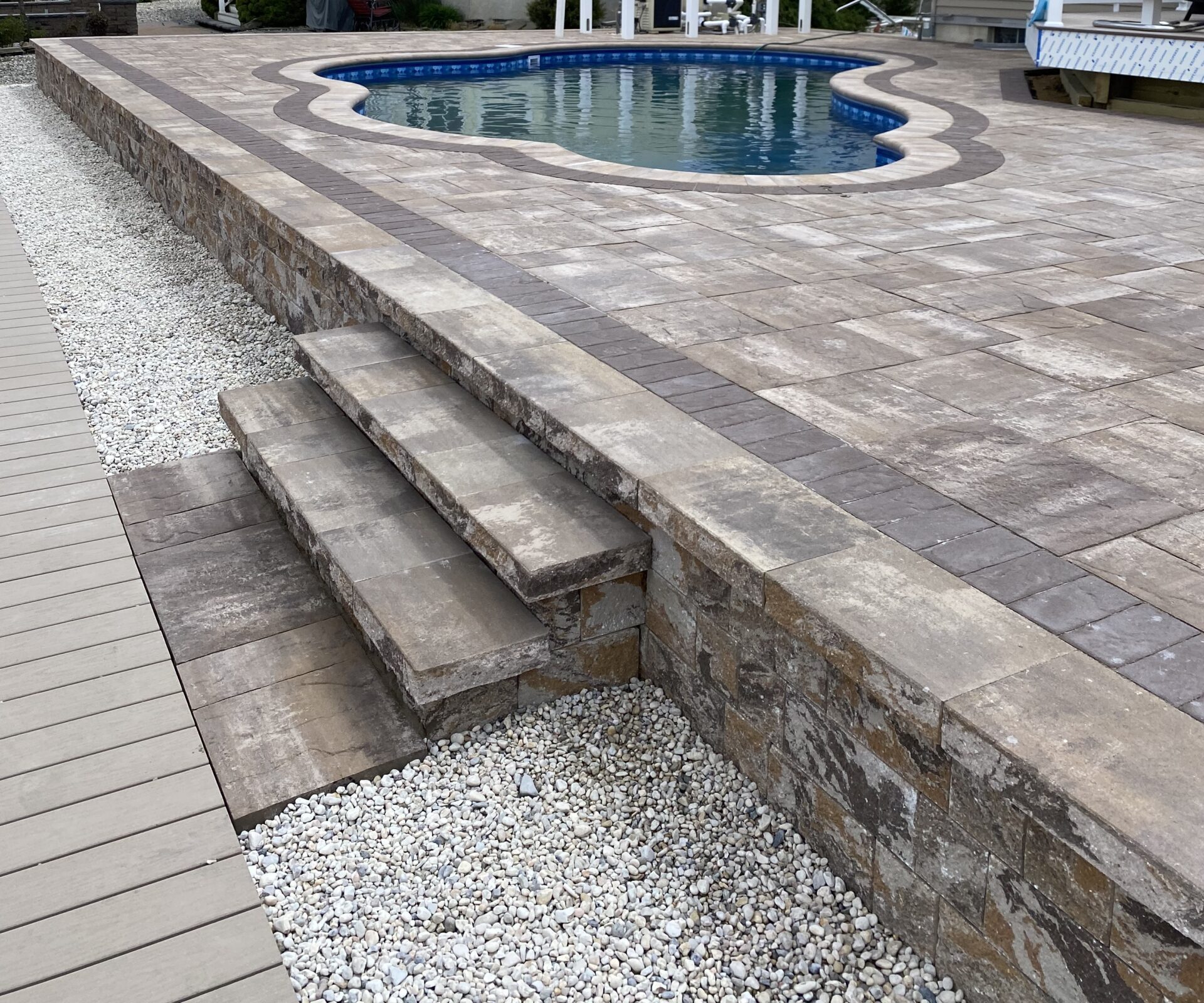
If you are planning an inground pool, it is easy to focus on the finished backyard and forget how much happens before the first swim. But pool installation delays in New Jersey are common, especially in shore communities where weather, permits, inspections, drainage, and coastal soil conditions all affect the schedule.
For homeowners in Ocean County, Monmouth County, Atlantic County, Cape May County, and nearby coastal areas, understanding these delays upfront helps set realistic expectations. It also helps you choose a contractor who can manage the process with less stress and fewer surprises.
At Jersey Shore Pavers, projects are planned with the full property in mind, not just the pool itself. That matters in coastal New Jersey, where site access, grading, paver layout, drainage, fencing, and surrounding outdoor features often influence how quickly an inground pool installation can move from design to completion.
Why Pool Installation Delays Happen More Often Near the Coast
Not every backyard in New Jersey presents the same construction challenges. Coastal properties often come with tighter lot lines, higher water tables, sandier soil, more drainage concerns, and municipal requirements that can vary by town.
That means coastal New Jersey pool construction often involves more coordination than homeowners expect. A project may include:
- Zoning review
- Construction permits
- Excavation planning
- Utility marking
- Drainage and grading adjustments
- Pool shell installation
- Electrical and plumbing work
- Fence installation
- Required construction inspections
Even if the work itself is done well, the timing between those steps can create delays.
Permits Often Slow the Project Before Construction Begins
One of the most common reasons for pool construction delays in New Jersey is the permit process. Municipal approval often takes longer than homeowners expect, especially during spring and early summer when construction departments are busiest.
New Jersey construction permit applications commonly involve multiple technical sections depending on the project, including building, electrical, and plumbing. Applications are handled through local construction offices, and requirements can vary by municipality. Homeowners can review general permit and code information through the New Jersey Department of Community Affairs.
For pool projects, permit delays can happen when:
- Site plans are incomplete
- Fence or barrier details are missing
- Setback measurements need clarification
- Drainage or grading plans need revision
- The town has a seasonal backlog
This is one reason local experience matters. A contractor familiar with coastal towns can often anticipate what reviewers want to see and reduce avoidable back-and-forth.
Inspections Can Create Delays Between Construction Phases
After permits come the inspections. These are often overlooked by homeowners, but they can be one of the biggest timing factors in a pool project.
Different stages of the work may require sign-off before the next phase begins. For example, trench-installed piping must be inspected before backfilling, and final approvals depend heavily on safety compliance. If an inspection gets delayed or fails, the schedule may pause while:
- Corrections are made
- A reinspection is scheduled
- Another trade waits to start
- Final safety work is completed
Even when a town is responsive, real-world inspection timing can still vary depending on staffing, season, and job complexity.
Weather Delays Are a Real Part of Shore-Area Construction
If you are building near the coast, weather is never a minor detail. Rain can delay excavation, saturate the soil, and slow grading. Wind can interfere with construction logistics. Storm systems can affect both the site itself and the availability of crews or materials.
In many New Jersey pool projects, weather can easily add extra time, especially in spring. Cold temperatures can also delay certain finishing work. What looks like a short interruption on the calendar can become a larger sequencing issue when one delayed trade pushes back the next.
That does not mean the project is off track. It means the schedule needs flexibility from the start.
High Water Tables and Coastal Soil Conditions Cause Hidden Delays
This is where coastal New Jersey pool construction differs most from standard inland jobs. Properties near the shore often deal with high groundwater, sandy soil, drainage challenges, and changing site conditions once excavation begins.
For homeowners, that can translate into delays caused by:
- Groundwater entering the excavation
- Additional drainage work
- Soil instability
- Engineering adjustments
- More extensive site preparation
These are not details to rush through. If site conditions call for extra planning, the right move is to address them properly instead of trying to force the project forward too quickly.
This is also where strong hardscaping and drainage planning becomes an important part of the overall project, not an afterthought.

Tight Access and Existing Backyard Features Can Slow Down the Job
Many shore homes have limited side-yard access, mature landscaping, fences, decks, sheds, or overhead utility lines that make construction more difficult.
That can affect:
- Excavation equipment size
- Material delivery routes
- How quickly crews can work
- Whether existing features need temporary removal
A beautiful finished pool often depends on a very practical question: how easily can a crew get in and out of the backyard with people, tools, and materials?
Materials, Scheduling, and Scope Changes Can Push Timelines Back
Not every delay comes from town approvals or site conditions. Some happen because of project management issues or homeowner changes along the way.
Common examples include:
- Material backorders during peak season
- Specialty finish or coping delays
- Gaps in contractor scheduling
- Design revisions after work begins
- Adding patios, kitchens, lighting, or fire features mid-project
This is why it helps to plan the whole outdoor space upfront. Pool construction often overlaps with drainage, lighting, fencing, pavers, and outdoor living design. Jersey Shore Pavers is well positioned for this kind of coordinated planning because the surrounding space is just as important as the pool itself.
How Homeowners Can Reduce the Risk of Delays
No contractor can eliminate every delay, but smart planning can reduce many of them.
Start planning early.
If you want to swim by summer, do not wait until late spring to begin.
Finalize design choices upfront
Changes during construction almost always affect timing.
Ask about permits and inspections
A strong contractor should clearly explain the approval process and likely timing.
Plan for drainage and fencing from day one
These are not add-ons. In coastal areas, they are essential parts of the project.
Choose a contractor with coastal experience
A team that understands shore conditions can anticipate issues before they become delays. Good landscape planning also helps support privacy, drainage performance, and the way the pool fits into the broader property layout.
Planning a Pool Project at the Jersey Shore? Start with the Right Team
Pool delays are not always avoidable, but many of the biggest setbacks can be reduced with better planning, clearer communication, and a contractor who understands coastal site conditions.
From permits and inspections to drainage, pavers, and full backyard coordination, Jersey Shore Pavers helps homeowners plan outdoor projects with long-term performance in mind.
If you are thinking about building an inground pool in Ocean County or anywhere along coastal New Jersey, schedule a consultation with Jersey Shore Pavers and get a realistic plan for your property, timeline, and goals.
Frequently Asked Questions About Inground Pool Delays in New Jersey
How long does pool installation usually take in New Jersey?
In most cases, inground pool installation in New Jersey takes about 10 to 16 weeks from planning to completion. Some projects move faster, but coastal New Jersey pool construction often takes longer because of permits, inspections, weather, drainage planning, and site-specific soil conditions.
What are the most common pool construction delays in New Jersey?
The most common causes of pool installation delays in New Jersey include permit approvals, inspections, weather, high water tables, sandy soil, utility conflicts, material backorders, fence compliance issues, and mid-project scope changes.
Can permits and inspections delay a pool project?
Yes. Pool permits and inspections are two of the biggest reasons projects get pushed back. Municipal review can take several weeks, and construction phases may need to pause until required inspections are completed and approved.
Why do high water tables and coastal soil conditions slow pool installation?
In coastal New Jersey, groundwater and sandy soil can create complications during excavation and site preparation. A high water table may require extra drainage work, water control, or structural planning before the installation can continue.
How can homeowners reduce the chance of pool installation delays?
Homeowners can reduce delays by starting early, finalizing design decisions before construction begins, and choosing a contractor with experience in coastal New Jersey pool construction. It also helps to plan the full backyard at once, including the pool, drainage, pavers, fencing, and outdoor features.


