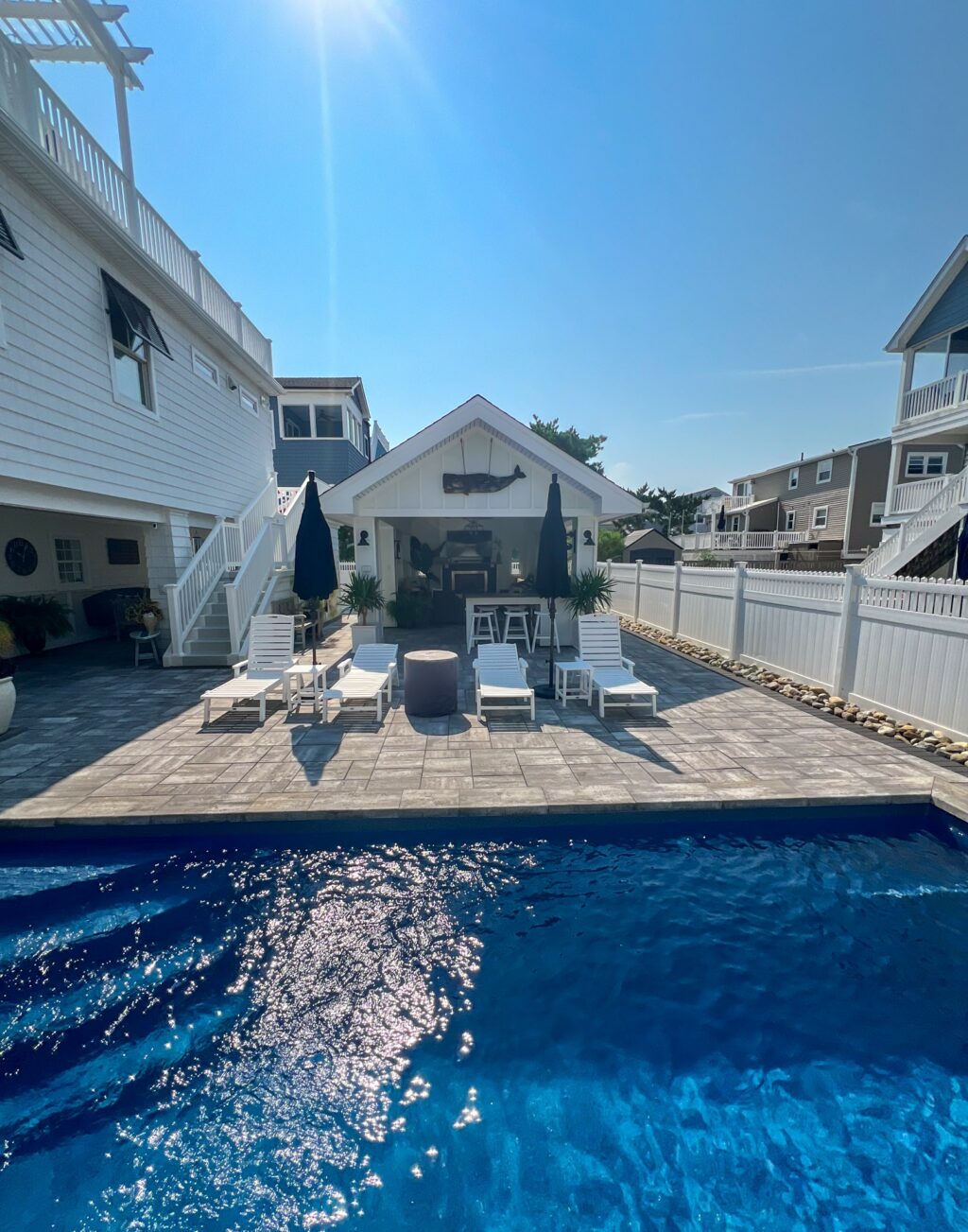
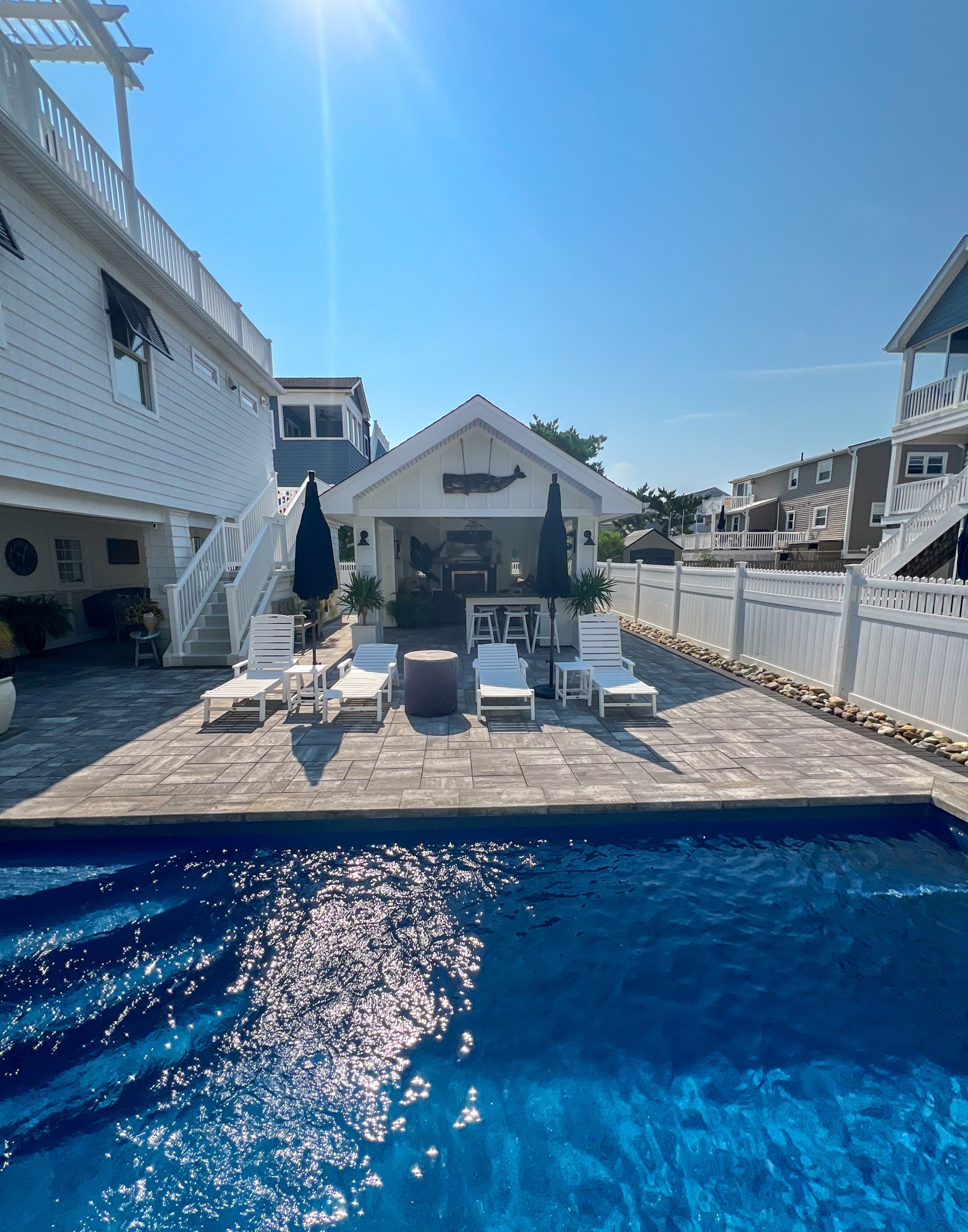
If you own a home near the coast, choosing the right pool patio materials in coastal New Jersey is not just about color, style, or budget.
Your patio has to stand up to salt air, moisture, summer heat, winter freezes, storms, and the constant expansion and contraction that comes with seasonal weather. That is exactly why understanding how salt air and freeze-thaw cycles affect pool patio materials matters before you build or replace a patio.
For homeowners in Ocean County and across the Jersey Shore, the wrong material or poor installation details can lead to cracking, surface wear, shifting, joint failure, and ongoing maintenance headaches.
The right combination of material selection, base preparation, drainage, and edge restraint can make a major difference in how your patio performs over time.
At Jersey Shore Pavers, this is a practical issue we help homeowners think through every day. Our approach to coastal hardscaping is built around local conditions, not just appearance on day one.
And when a patio is part of a larger in-ground pool project, those material and installation decisions matter even more.
Why Coastal New Jersey Is Tough on Pool Patios
A pool patio in inland New Jersey already deals with weather swings. A pool patio near the shore faces even more pressure.
Coastal properties in places like Barnegat, Manahawkin, Long Beach Island, Forked River, and Toms River are exposed to the following:
- Salt air and wind-driven moisture
- Freeze-thaw cycles in winter
- Summer heat and UV exposure
- Heavy rain and storm runoff
- Pool splash-out from chemical or saltwater systems
- Soil movement and shifting from wet-dry cycles
Each of these factors can affect pool patio materials, but the bigger issue is how they work together. A material may look strong on the surface, yet still struggle if water gets underneath it, freezes, expands, and repeats that cycle all winter long.
If you are planning a larger outdoor renovation, this is also where the relationship between the patio, grading, and overall landscape design becomes important.
A pool area should function as part of the entire property, not as a standalone surface.
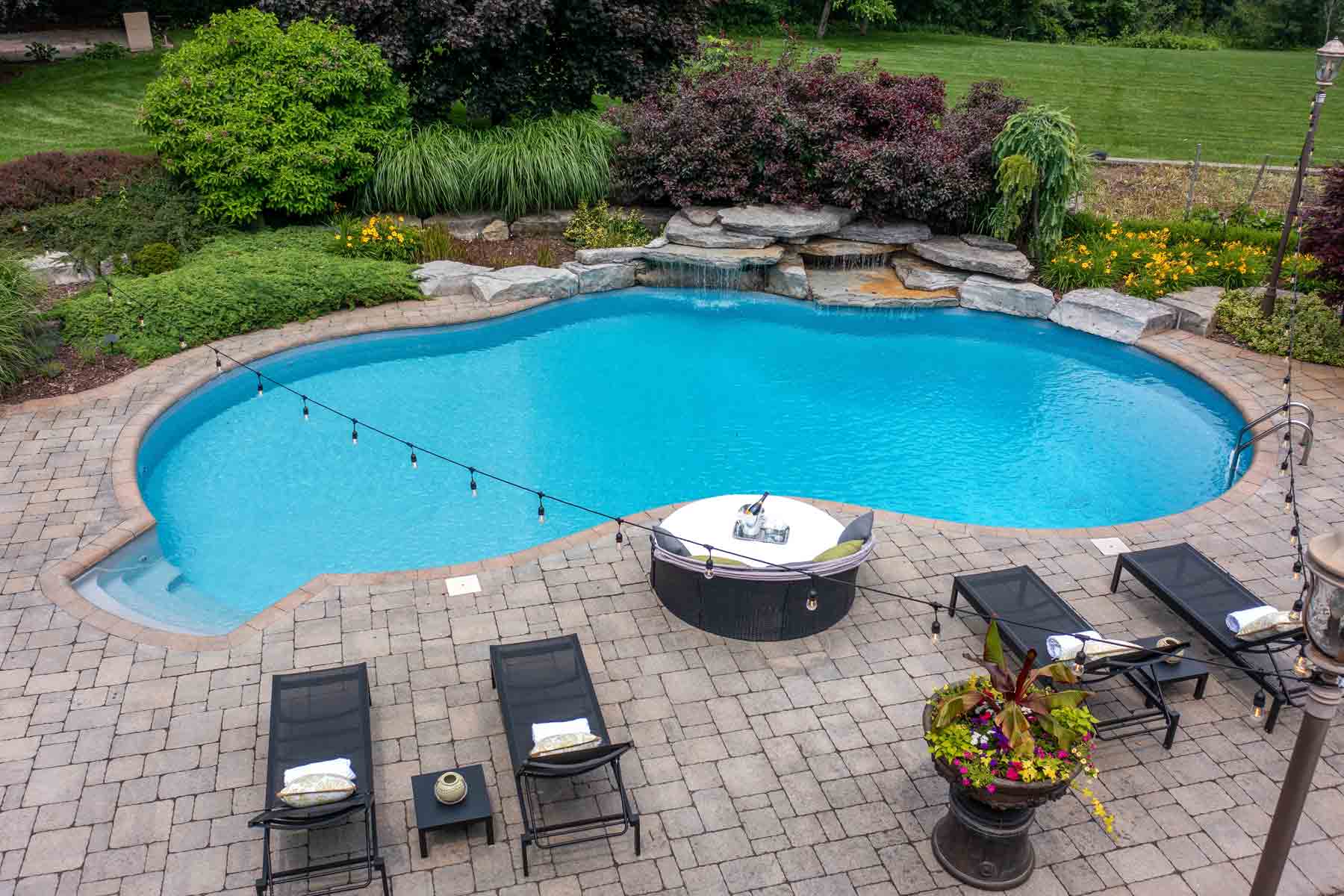
Knowing Salt Air Patio Damage and What It Does to Materials
When homeowners hear “salt air damage,” they often picture rust on metal. But salt air can also affect hardscape materials more subtly.
Salt Increases Moisture Exposure
Salt-laden coastal air tends to keep surfaces damp longer, especially in shaded or poorly drained areas. That extra moisture can move into joints, pores, and base materials.
Salt Can Worsen Surface Wear
Salt itself does not automatically destroy every patio surface, but it can contribute to gradual wear when combined with moisture, traffic, and temperature swings. Some materials are more porous than others, which makes them more vulnerable.
Salt Highlights Drainage Problems
If runoff sits on the patio or seeps into the base, salts and minerals can travel through the material and leave behind visible deposits. This is one reason some homeowners see a white, chalky film called efflorescence on concrete pavers. According to Unilock, efflorescence forms when moisture carries naturally occurring salts to the surface as the material dries.
For shore-area homes, salt exposure is often one part of a bigger design conversation that also includes runoff, planting, grading, and storm resilience. If you want a broader look at protecting your property, see our post on coastal landscaping tips to protect your yard from salt air and storms.
In short, salt air patio damage is rarely just a surface issue. It usually exposes a broader durability problem involving water movement, drainage, and material choice.
How Freeze-Thaw Cycles Cause Patio Damage
Freeze-thaw patio damage happens when water enters small spaces in or beneath a patio, freezes, expands, and then thaws. That movement puts repeated stress on the patio surface and its support system.
Common Freeze-Thaw Problems
Homeowners in coastal New Jersey may notice:
- Cracking in concrete slabs
- Spalling or flaking on the surface
- Loose or washed-out joints
- Heaving, dipping, or uneven sections
- Edge movement around the patio perimeter
- Water pooling that gets worse each season
The freeze-thaw cycle is especially hard on patios that were installed without enough drainage or without the right base depth and compaction.
For interlocking concrete pavers, durability depends heavily on density, jointing materials, and water management. The Concrete Masonry & Hardscapes Association notes that properly manufactured pavers and correct jointing and bedding materials help reduce water penetration and improve freeze-thaw performance.
This is one reason many homeowners choose hardscaping solutions designed for long-term performance instead of focusing only on the initial finished look.
Performance of Different Patio Pool Materials at the Jersey Shore
Not all patio materials respond the same way to coastal exposure. Here is how the main options compare.
Concrete Pavers
Concrete pavers are often one of the strongest choices for Jersey Shore pool patios when they are properly installed.
Why They Perform Well:
- Individual units can move slightly without the whole patio cracking like a slab
- Damaged pavers can be replaced without tearing out the full surface
- Textured finishes can provide good slip resistance around pools
- They pair well with drainage-focused installations
What to Watch:
Concrete pavers can still show salt air damage or freeze-thaw patio damage if:
- Joint sand washes out
- Water gets trapped in the base
- Edging fails and allows spreading
- Lower-quality pavers are used in exposed locations
If you are early in the planning process, our guide on how to design the perfect pool patio with pavers is a helpful next step.
Poured Concrete
Poured concrete can create a clean look, but it is often more vulnerable in coastal conditions if drainage and expansion control are not handled carefully.
Potential Issues:
- Slab cracking from freeze-thaw movement
- Surface scaling or flaking over time
- More visible wear if the finish deteriorates
- Harder repairs if one section fails
For homeowners prioritizing long-term serviceability, poured concrete may require more caution in a coastal hardscaping environment.
Natural Stone
Natural stone can be beautiful around pools, but performance depends heavily on the type of stone, its absorption rate, thickness, and installation method.
Some dense, frost-resistant stones hold up well. More porous stones can absorb water and become more vulnerable to freeze-thaw stress.
The Natural Stone Institute emphasizes that stone selection for exterior paving should consider physical properties and freeze-thaw suitability, not just appearance.
Best Practice:
If you are considering stone, ask specifically about the following:
- Freeze-thaw suitability
- Slip resistance around pools
- Water absorption
- Base and drainage requirements
Porcelain Pavers
Porcelain can be a strong option for modern pool designs because of its low absorption rate and clean appearance. Still, it depends on a correct installation system. A premium material can still fail if the base, drainage, or edge support is weak.
The Hidden Parts of a Durable Pool Patio
Homeowners often focus on the visible surface, but many long-term problems start below it.
- Base Preparation: A durable patio needs a properly compacted base built for local soil and drainage conditions.
- Water Management: Water should move away from the pool, away from the home, and off the patio efficiently. Even a slight slope matters.
- Jointing Materials: Joint sand and stabilizers help lock pavers together and reduce water intrusion.
- Edge Restraints: Without strong edges, pavers can spread or shift over time.
- Material Matching: The patio surface, coping, borders, and nearby hardscape should work together as a system.
This is where design experience matters. A patio that looks impressive at installation can still fail early if the system underneath is not engineered to withstand shore conditions.
It also helps when the pool area is planned alongside the rest of your outdoor living space, whether that includes seating areas, fire features, walkways, lighting, or a full backyard entertaining layout.
How Homeowners Can Reduce Salt Air and Freeze-Thaw Damage
If you are planning a new patio or replacing an older one, these steps can help protect your investment:
- Choose materials rated for exterior freeze-thaw exposure.
- Prioritize drainage as much as appearance.
- Avoid assuming all stone or concrete products perform the same.
- Ask about joint stabilization and edge restraint details.
- Use contractors who understand coastal hardscaping in Ocean County.
- Schedule seasonal inspections if you already see movement, pooling, or joint loss.
It is also smart to maintain the patio through the year. Our hardscaping maintenance checklist for every season in New Jersey can help homeowners stay ahead of small issues before they become larger repairs.
Planning a Pool Patio Built for Coastal New Jersey?
A pool patio near the shore should do more than look good in summer. It should be designed to handle salt air, moisture, freeze-thaw cycles, and the seasonal demands of coastal New Jersey without losing performance or curb appeal.
If you’re comparing pool patio materials or starting a backyard renovation in Ocean County or the Jersey Shore area, Jersey Shore Pavers can help you choose a patio system that fits your home, your design goals, and your site conditions.
From material selection to drainage planning and expert installation, our team builds outdoor spaces engineered to withstand shore conditions.
You can also explore our project portfolio to see how thoughtful material selection and expert installation come together in real backyard transformations.
Ready to bring your ideas to life? Contact us for a free estimate and start planning a pool patio designed for lasting beauty, comfort, and performance.
Frequently Asked Questions About Pool Patio Materials in Coastal New Jersey
What pool patio materials hold up best near the Jersey Shore?
For many homeowners in coastal New Jersey, high-quality concrete pavers and properly specified natural stone are among the strongest options because they can handle moisture, seasonal temperature swings, and daily pool use better than many basic slab installations.
The right choice depends on your property’s drainage, sun exposure, design goals, and how close your home is to salt air. For Jersey Shore pool patios, installation quality matters just as much as the surface material itself.
How common is salt air patio damage in Ocean County?
Yes, salt air can contribute to long-term wear on a pool patio in Ocean County. On its own, salt air may not immediately ruin the surface, but it adds moisture exposure and can speed up issues when combined with poor drainage, winter freezing, and seasonal thawing.
Over time, homeowners may notice surface wear, joint deterioration, mineral deposits, or movement in sections that were not designed for coastal hardscaping conditions.
Why do some pool patios crack or shift after winter in New Jersey?
In New Jersey, winter patio problems are often caused by freeze-thaw cycles. Water enters small openings in the surface, joints, or base, then freezes and expands.
As that process repeats, it can create cracking, heaving, loose pavers, washed-out joints, or uneven sections. Around the shore, this can be even more noticeable because coastal moisture and storm exposure make water management more important from the start.
Are concrete pavers better than poured concrete for coastal pool patios?
In many cases, yes. Concrete pavers are often a better fit for coastal New Jersey pool patios because they are installed as individual units rather than one large slab.
That allows the system to handle minor movement more gracefully and makes repairs easier if one area becomes damaged. Poured concrete can still work in some settings, but it is generally more vulnerable to visible cracking if freeze-thaw movement or settling occurs.
How can I protect my pool patio from salt air and freeze-thaw damage?
The best protection starts before installation. Homeowners should choose materials rated for exterior use, make sure the patio has proper slope and drainage, use a correctly compacted base, and work with a contractor familiar with Jersey Shore site conditions.
Ongoing maintenance also helps. If you notice pooling water, loose joints, shifting edges, or surface wear, it is best to address it early before small issues turn into larger repairs.