

A pool may be the feature that gets the most attention, but the space around it is what determines how often you actually enjoy your backyard.
NJ homeowners know that the best results in designing poolside outdoor living spaces go far beyond the pool itself. A good design allows you to collect, lounge, eat and walk through the yard easily so the entire property feels connected and usable.
That is especially important in New Jersey, where outdoor spaces need to work through humid summers, spring rain, coastal conditions, and seasonal temperature swings.
To create a functional outdoor living space around a pool, New Jersey homeowners must account for patio layout, drainage, privacy, shade, lighting, landscaping, and long-term durability.
For homeowners planning a new pool or upgrading an existing backyard, the goal should not be to simply surround the water with hardscape. It should be to create a complete environment.
Jersey Shore Pavers helps homeowners throughout Ocean County, New Jersey, design and build outdoor spaces that feel refined, functional, and built for everyday living.
Start With How You Want to Use the Space
Before choosing pavers, furniture, or plantings, it helps to think about how the space will actually be used.
A successful backyard pool design starts with the lifestyle behind it. Some homeowners want a quiet place to unwind after work. Others want a social backyard with room for family gatherings, weekend cookouts, and outdoor entertaining.
Many want both.
That mix of uses affects the size of the patio, the location of seating, the amount of shade, and whether features like an outdoor kitchen or fire element make sense.
Useful Planning Questions Include:
- Primary use: Will the space be used mostly for relaxing, entertaining, or both?
- Zoning: Do you want separate zones for dining and lounging?
- Deck space: How much open deck area is needed around the pool?
- Traffic flow: Will kids or guests need wider walking paths and more flexible seating space?
- Aesthetics: Do you want the finished yard to feel formal, coastal, natural, or resort-inspired?
The answers create the framework for the rest of the design.
Break the Backyard Into Outdoor Zones
One of the best ways to approach a backyard design is to think of the yard as a series of connected outdoor rooms. This helps the design feel more intentional and prevents everything from being crowded into one oversized pool patio area.
Common Zones to Include Around a Pool
- Lounge area: for chaise chairs or casual seating
- Dining area: for outdoor meals and entertaining
- Shade area: under a pergola or pavilion
- Cooking area: for a grill station or full outdoor kitchen
- Transition paths: connecting the home, pool, and yard
- Evening gathering area: with a fire pit or fire feature
When these zones are laid out properly, the yard feels complete rather than pieced together. This is one of the biggest differences between a basic pool installation and a true Jersey Shore outdoor living design.
Choose Materials That Fit New Jersey Conditions
The pool patio has to handle more than looks. It needs to perform under constant exposure to water, sunlight, foot traffic, and freeze-thaw cycles.
In coastal and near-coastal parts of New Jersey, materials also need to stand up to extra moisture and salt-air exposure.
(Read more about how salt air affects patio materials here).
That is why pavers are often a strong choice for pool surroundings. They provide durability, design flexibility, and a more custom appearance than many basic concrete installations.
They also allow for easier repairs if isolated areas ever need adjustment.
When Comparing Materials, Think About:
- Slip resistance: when wet
- Surface temperature: during hot weather
- Durability: resistance to cracking and seasonal movement
- Maintenance: ease of cleaning and upkeep
- Style: compatibility with the home’s style and the overall landscape plan
A patio should support the design visually, but it should also hold up to real use year after year.
Plan for Drainage From the Beginning
Drainage is one of the most important parts of poolside planning and one of the most commonly overlooked.
Without a good drainage strategy, water can collect on the patio, wash into planting beds, create slippery conditions, or contribute to long-term settlement problems.
A well-planned outdoor living space needs to guide water away from the house, away from the pool, and away from primary seating or dining areas.
That may involve grading, channel drains, runoff control, permeable design elements, and careful transitions between hardscape and landscape.
(Learn more about how to plan drainage before building a pool or patio).
This matters not only for function but also for responsible site planning. The New Jersey Department of Environmental Protection emphasizes minimizing impervious surfaces and preserving sound stormwater management strategies where possible.
The simplest time to solve drainage is during design. Waiting until after installation usually means a more expensive correction.
Design for Shade, Comfort, and Privacy
A pool area may be open by nature, but it should not feel exposed.
Good design balances sunlight with shaded retreat areas and introduces privacy without making the yard feel closed in.
Popular Ways to Improve Comfort Include:
- Overhead structures: like pergolas and pavilions
- Natural screening: thoughtfully placed trees and layered landscaping
- Privacy barriers: screening with shrubs or fencing
- Structural definition: seat walls that define space
- Covered zones: dedicated dining or lounge areas
- Flexible shade: strategic placement of umbrellas and built-in features
For many homeowners, privacy is just as important as aesthetics.
In neighborhoods where homes are closer together, layering structural elements with planting design often creates a more refined result than relying on fencing alone.
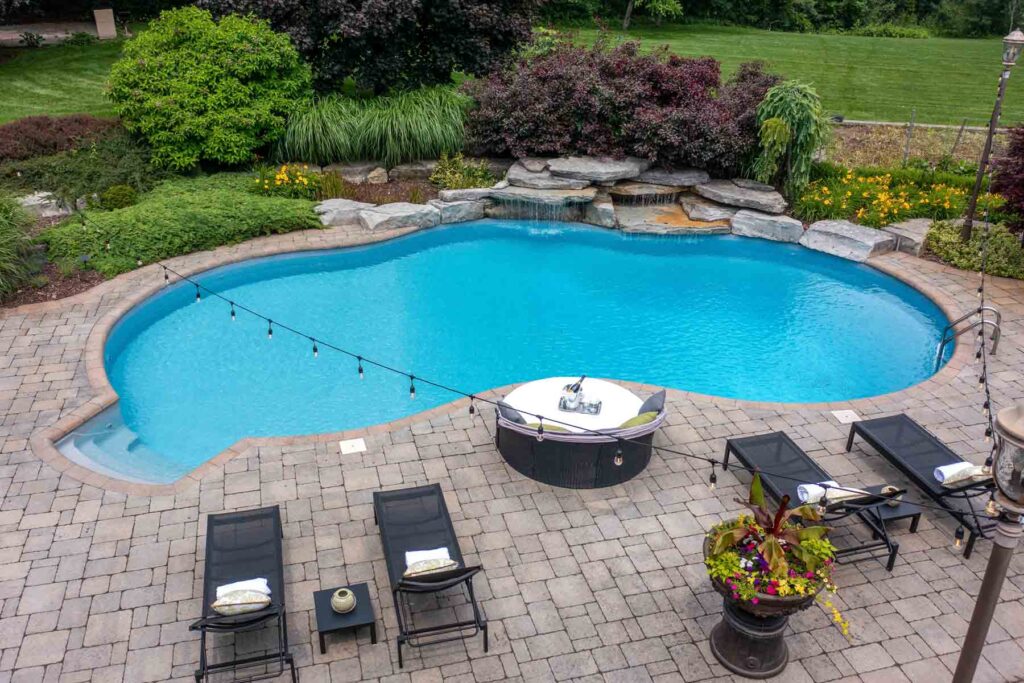
Extend the Space With Lighting and Evening Features
The best backyard pool design works just as well in the evening as it does during the day. Lighting helps the space stay functional, improves safety, and creates a more inviting atmosphere after sunset.
Poolside Lighting Can Be Used To:
- Illuminate: walkways and steps for safety
- Highlight: retaining walls and architectural details
- Add ambiance: soft ambient light to seating areas
- Improve visibility: near outdoor kitchens or dining spaces
- Showcase: trees, garden beds, or water features
Adding a fire pit or fire feature can also change how the space is used. It gives the backyard a second focal point and helps extend the season, especially on cooler New Jersey nights.
A pool may be the feature that gets the most attention, but the space around it is what determines how often you actually enjoy your backyard.
When planning a poolside outdoor living design, New Jersey homeowners know that the best results go far beyond the pool itself.
A great design creates room for gathering, relaxing, dining, and moving comfortably through the yard, so the whole property feels connected and usable.
That is especially important in New Jersey, where outdoor spaces need to work through humid summers, spring rain, coastal conditions, and seasonal temperature swings.
To create a functional outdoor living space around a pool, New Jersey homeowners must account for patio layout, drainage, privacy, shade, lighting, landscaping, and long-term durability.
For homeowners planning a new pool or upgrading an existing backyard, the goal should not be to simply surround the water with hardscape. It should be to create a complete environment.
Jersey Shore Pavers helps homeowners in Barnegat, New Jersey, and throughout Ocean County, design and build outdoor spaces that feel refined, functional, and built for everyday living.
Start With How You Want to Use the Space
Before choosing pavers, furniture, or plantings, it helps to think about how the space will actually be used. A successful backyard pool design starts with the lifestyle behind it.
Some homeowners want a quiet place to unwind after work.
Others want a social backyard with room for family gatherings, weekend cookouts, and outdoor entertaining. Many want both.
That mix of uses affects the size of the patio, the location of seating, the amount of shade, and whether features like an outdoor kitchen or fire element make sense.
Useful Planning Questions Include:
- Primary use: Will the space be used mostly for relaxing, entertaining, or both?
- Zoning: Do you want separate zones for dining and lounging?
- Deck space: How much open deck area is needed around the pool?
- Traffic flow: Will kids or guests need wider walking paths and more flexible seating space?
- Aesthetics: Do you want the finished yard to feel formal, coastal, natural, or resort-inspired?
The answers create the framework for the rest of the design.
Break the Backyard Into Outdoor Zones
One of the best ways to approach a backyard design is to think of the yard as a series of connected outdoor rooms. This helps the design feel more intentional and prevents everything from being crowded into one oversized pool patio area.
Common Zones to Include Around a Pool
- Lounge area: for chaise chairs or casual seating
- Dining area: for outdoor meals and entertaining
- Shade area: under a pergola or pavilion
- Cooking area: for a grill station or full outdoor kitchen
- Transition paths: connecting the home, pool, and yard
- Evening gathering area: with a fire pit or fire feature
When these zones are laid out properly, the yard feels complete rather than pieced together. This is one of the biggest differences between a basic pool installation and a true Jersey Shore outdoor living design.
Choose Materials That Fit New Jersey Conditions
The pool patio has to handle more than looks. It needs to perform under constant exposure to water, sunlight, foot traffic, and freeze-thaw cycles. In coastal and near-coastal parts of New Jersey, materials also need to stand up to extra moisture and salt-air exposure.
That is why pavers are often a strong choice for pool surroundings. They provide durability, design flexibility, and a more custom appearance than many basic concrete installations.
They also allow for easier repairs if isolated areas ever need adjustment.
When Comparing Materials, Think About:
- Slip resistance: when wet
- Surface temperature: during hot weather
- Durability: resistance to cracking and seasonal movement
- Maintenance: ease of cleaning and upkeep
- Style: compatibility with the home’s style and the overall landscape plan
A patio should support the design visually, but it should also hold up to real use year after year.
Plan for Drainage From the Beginning
Drainage is one of the most important parts of poolside planning and one of the most commonly overlooked.
Without a good drainage strategy, water can collect on the patio, wash into planting beds, create slippery conditions, or contribute to long-term settlement problems.
A well-planned outdoor living space needs to guide water away from the house, away from the pool, and away from primary seating or dining areas.
That may involve grading, channel drains, runoff control, permeable design elements, and careful transitions between hardscape and landscape. (Learn more about how to plan drainage before building a pool or patio).
This matters not only for function but also for responsible site planning.
The New Jersey Department of Environmental Protection emphasizes minimizing impervious surfaces and preserving sound stormwater management strategies where possible.
The simplest time to solve drainage is during design. Waiting until after installation usually means a more expensive correction.
Design for Shade, Comfort, and Privacy
A pool area may be open by nature, but it should not feel exposed.
Good design balances sunlight with shaded retreat areas and introduces privacy without making the yard feel closed in.
Popular Ways to Improve Comfort Include:
- Overhead structures: like pergolas and pavilions
- Natural screening: thoughtfully placed trees and layered landscaping
- Privacy barriers: screening with shrubs or fencing
- Structural definition: seat walls that define space
- Covered zones: dedicated dining or lounge areas
- Flexible shade: strategic placement of umbrellas and built-in features
For many homeowners, privacy is just as important as aesthetics.
In neighborhoods where homes are closer together, layering structural elements with planting design often creates a more refined result than relying on fencing alone.
Extend the Space With Lighting and Evening Features
The best backyard pool design works just as well in the evening as it does during the day. Lighting helps the space stay functional, improves safety, and creates a more inviting atmosphere after sunset.
Poolside Lighting Can Be Used To:
- Illuminate: walkways and steps for safety
- Highlight: retaining walls and architectural details
- Add ambiance: soft ambient light to seating areas
- Improve visibility: near outdoor kitchens or dining spaces
- Showcase: trees, garden beds, or water features
Adding a fire pit or fire feature can also change how the space is used. It gives the backyard a second focal point and helps extend the season, especially on cooler New Jersey nights.
Build Safety Into the Layout
A well-designed pool area should feel seamless, but safety planning has to be part of the process from the start.
New Jersey homeowners should be aware that residential pools generally require compliant barriers and gate features, along with local permitting review.
(Review our guide on questions to ask before hiring a pool contractor for more tips on navigating permits).
Official New Jersey code guidance includes pool barrier standards such as a minimum 48-inch barrier height, self-closing and self-latching pedestrian gates, and clearance requirements around the enclosure.
That does not mean the final design has to feel restrictive. With the right planning, safety features can be integrated into the overall look of the yard rather than treated as an afterthought.
Approaching Your Backyard Design With Pool and Patio as One Complete Space
The most successful backyard design with pool and patio projects treats the pool as one part of a larger outdoor environment. The patio, walkways, lighting, landscaping, fencing, gathering spaces, and transition areas all need to work together.
That is where a full-property approach matters.
Jersey Shore Pavers uses advanced 3D landscape design to help homeowners in Ocean County, New Jersey, and nearby communities visualize how each part of the project will fit together before construction begins.
That planning process helps create an outdoor living space that feels balanced, practical, and aligned with the home.
A pool can be the anchor of the backyard, but the surrounding design is what turns it into a destination.
Ready to Plan Your Poolside Outdoor Living Space?
If you are investing in a new pool or reworking an existing backyard, the surrounding design deserves just as much attention as the water itself.
A well-planned poolside space can improve comfort, add function, support entertaining, and make your property feel more complete.
We design and build custom outdoor environments for homeowners throughout Ocean County, New Jersey.
From patios and walkways to shade structures, landscaping, and full outdoor living layouts, our team helps bring ideas to life with thoughtful planning and expert craftsmanship.
If you are ready to create a backyard that feels finished, functional, and built for the way you live, contact Jersey Shore Pavers for a free estimate.
Frequently Asked Questions: Poolside Outdoor Living Design in New Jersey
How much patio space is needed for a functional backyard pool design?
The right amount depends on how you plan to use the space. If you want room for lounge chairs, dining, and entertaining, you will need more than a narrow walking edge around the pool.
A good design should leave enough space for movement, seating, and transitions between zones without making the yard feel overcrowded.
(Read more about what changes pool patio pricing in New Jersey here).
What is the best material for a pool patio in New Jersey?
Many homeowners choose pavers because they are durable, visually versatile, and well-suited to New Jersey’s freeze-thaw conditions. The best option depends on the design style, slip resistance, maintenance expectations, and how the patio connects to the rest of the landscape.
How do you add privacy to a pool area?
Privacy can be added through a combination of fencing, layered landscaping, pergolas, pavilions, and layout decisions that define gathering areas more intentionally.
The most natural-looking results usually come from combining structural features with planting design.
Does a pool patio need drainage planning in NJ?
Yes. Proper drainage is essential for safety, long-term performance, and protecting the surrounding landscape and hardscape. In New Jersey, drainage planning is especially important because of heavy rains, seasonal weather changes, and site-specific runoff concerns.
Do New Jersey pools need fencing or barriers?
In most cases, yes. Residential pools in New Jersey generally need compliant barriers and self-closing, self-latching gates. Homeowners should always confirm final requirements with local code officials and project professionals before construction.

